How to Perform Effective Routing
Basic Principle
Routing is a navigation aid that can serve two different — but not necessarily contradictory — purposes:
- On passage: comfort and safety, avoiding sea and wind conditions that the boat and crew cannot handle,
- Racing: performance, the best efficiency for the best passage time.
Routing is like a cooking recipe: you first need good ingredients:
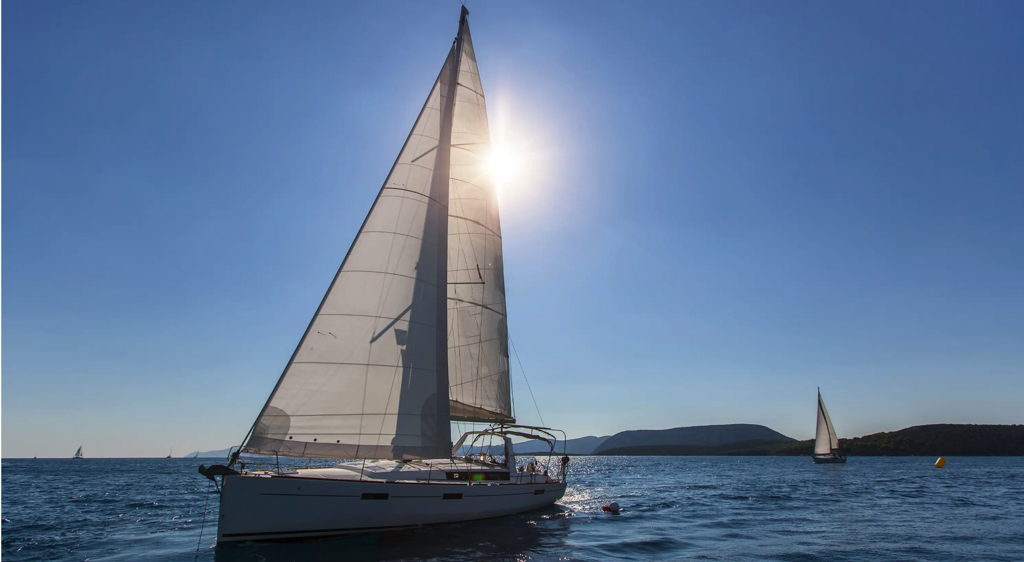
- A speed polar containing the theoretical target speeds the boat can achieve based on true wind speed (TWS) and the sailing angle relative to that wind direction (TWA).
- A route with a minimum of waypoints: preferably only departure and destination. Intermediate waypoints should only be used for mandatory passage points.
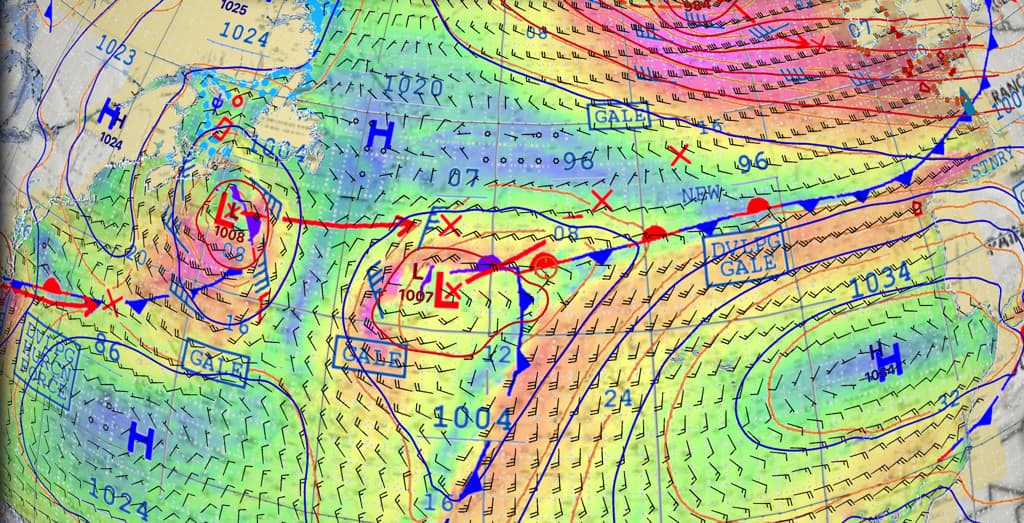
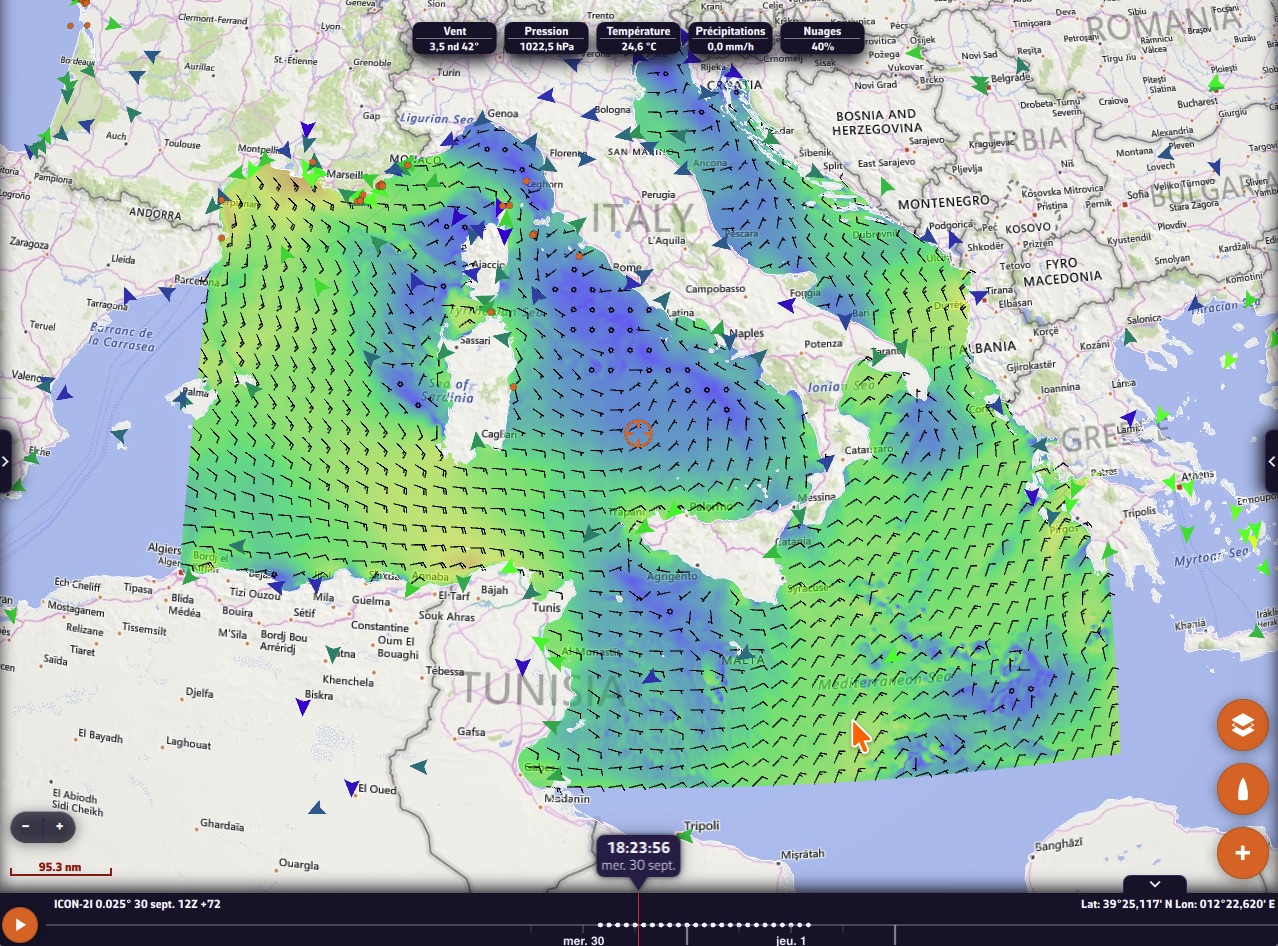
- Several GRIB files broadly covering the route: wind, waves, currents — the most recent available, with a time horizon sufficient for the approximate duration of the passage.
- A departure date within the temporal coverage of the GRIB files and as early as possible.
The Recipe
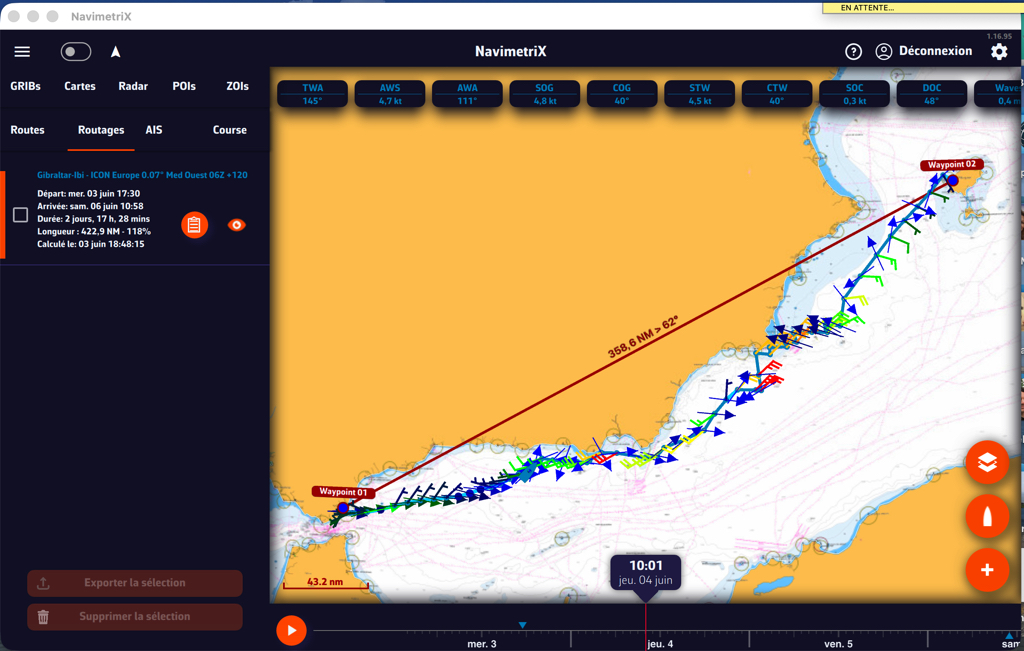
The recipe is based on a routing algorithm — a clever calculation whose inner workings are classified top secret. This calculation determines an optimised route by combining wind values and directions, currents and waves with the boat’s speed polar values, along a course from departure to destination.
Read more →